Chief Minister Vishnudev Sai told how Bastar became a model of culture, participation and development
Raipur 25 May 2025
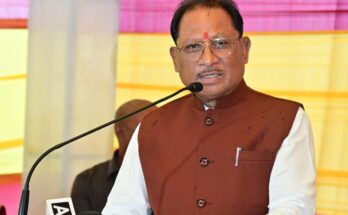
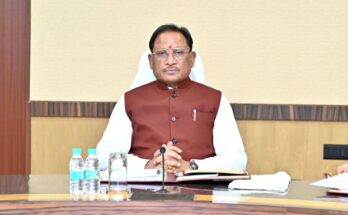
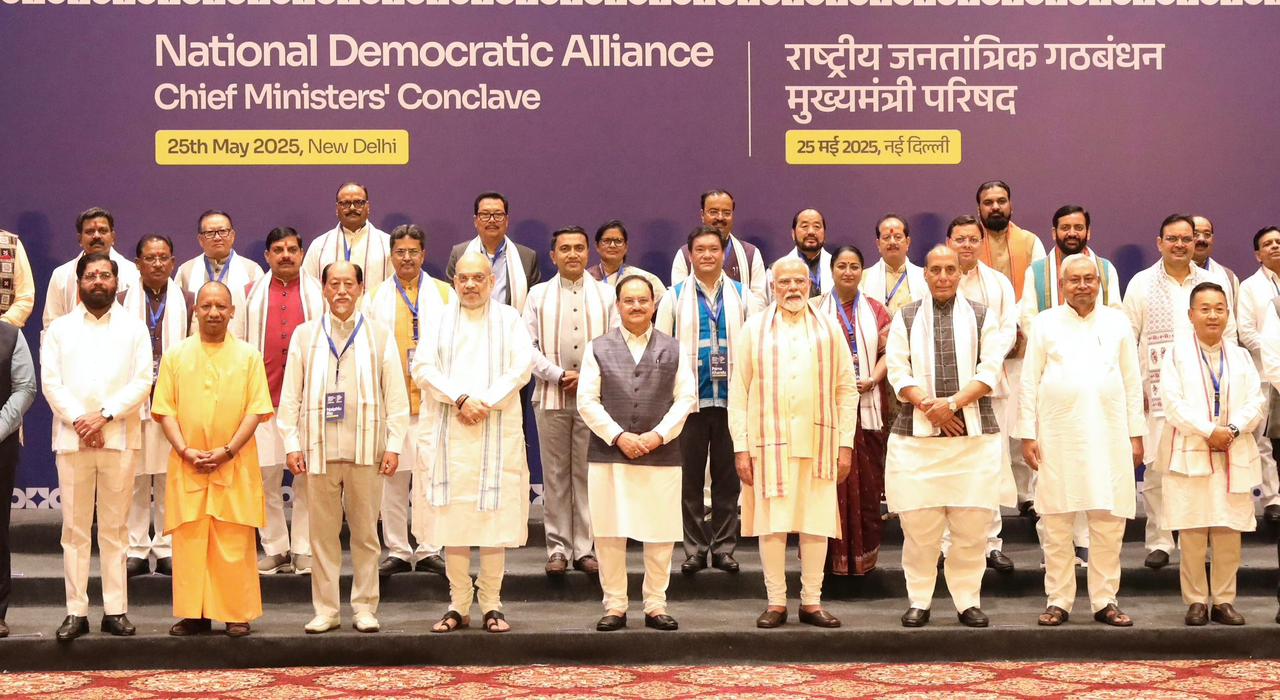
Chhattisgarh government’s good governance model, innovations and public participation based schemes got special recognition in the meeting of the Council of Chief Ministers held at Ashok Hotel in the capital Delhi. Innovative events like Bastar Olympics and Bastar Pandum presented by Chief Minister Shri Vishnu Dev Sai attracted the attention of Chief Ministers of various states including Prime Minister Shri Narendra Modi. Deputy Chief Minister Shri Arun Saw and Shri Vijay Sharma were also present in the meeting.
Chief Minister Shri Sai started his presentation with the institutional initiatives of good governance in the state. He informed that by forming ‘Good Governance and Convergence Department’ in Chhattisgarh, schemes are being implemented effectively. Schemes are being monitored through digital platforms like ‘Atal Monitoring Portal’, due to which resolution of complaints is possible within the stipulated time. He said that the objective of governance is not only to make schemes, but also to implement them with honesty and sensitivity at the ground level.
There was also a special discussion on the implementation of the Centre’s flagship schemes in the meeting. The Chief Minister informed that schemes like Pradhan Mantri Awas Yojana, Ujjwala, Ayushman Bharat and Jal Jeevan Mission have been made available to the common people in Chhattisgarh through Gram Sabha, public dialogue and technology.
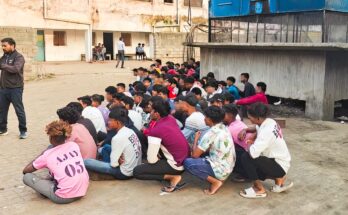
The most inspiring moment of the meeting came when the Chief Minister gave a special presentation on Bastar Olympics and Bastar Pandum. Quoting Prime Minister Modi’s ‘Kheloge India, Jeetoge India’ mantra, he said that Chhattisgarh has made it a reality on the ground. Bastar Olympics is no longer just a sporting event, but has become a social revolution – which has snatched guns from the hands of the youth and given them balls, spears and arrows.
The Chief Minister said that 1.65 lakh participants from 32 development blocks of 7 districts took part in this event. Organised in three phases – development block, district and division level, this competition was focused on 11 traditional games like archery, kho-kho, kabaddi, running, tug of war etc. Competitions were organised in four categories – junior, senior, women and Divyang.
Chief Minister Sai shared the example of Punen Sanna of Dornapal, who was once from a Naxal-affected area, but today has become an inspiration for the entire society by winning a medal in wheelchair racing. Prime Minister Shri Modi also praised the Bastar Olympics in the ‘Mann Ki Baat’ program and said that this event is not just a sport, but a celebration of the soul of Bastar.
The Chief Minister said that through the Bastar Pandum festival, Chhattisgarh not only preserved the tribal culture, folk arts and traditions, but also provided them a national platform. 1,743 cultural groups and 47,000 participants from 1,885 gram panchayats of 32 development blocks of 7 districts participated in this event. Decorated with various colours like folk dance, song-music, haat-bazaar, culinary competitions, this festival became a symbol of unity, identity and development of Bastar by connecting the elderly to the youth. An incentive amount of Rs 2.4 crore was also provided by the government. In Naxal-affected areas, this event has awakened a new consciousness of a positive future through celebration and sports.
Among the states that got the opportunity to present their plans in the meeting, Chhattisgarh’s ‘Bastar Model’ was very impressive. This unique combination of public participation, culture and development impressed everyone. It was suggested in the meeting that such models based on public participation and cultural connection can be adopted in other states as well. Prime Minister Shri Narendra Modi and Chief Ministers of other states described these initiatives as exemplary and suggested that such innovations, which connect with the roots of the society and determine the direction of development, should be expanded. The way Chhattisgarh’s ‘Bastar Model’ was appreciated in the meeting of the Council of Chief Ministers, it made it clear that how a strong foundation of change can be laid even in remote and challenging areas by coordinating public participation, cultural renaissance and development.